How to Calculate ARV: Step by Step with Real Comps
Knowing how to calculate ARV is the difference between an offer that makes money and one that loses it. ARV, the after repair value, is what a house should sell for once it is fully renovated, and every number in a deal is worked backwards from it: the max offer, the repair budget, the wholesale fee and the seller conversation. The math itself is short. The skill is in choosing which sales count.
The ARV formula
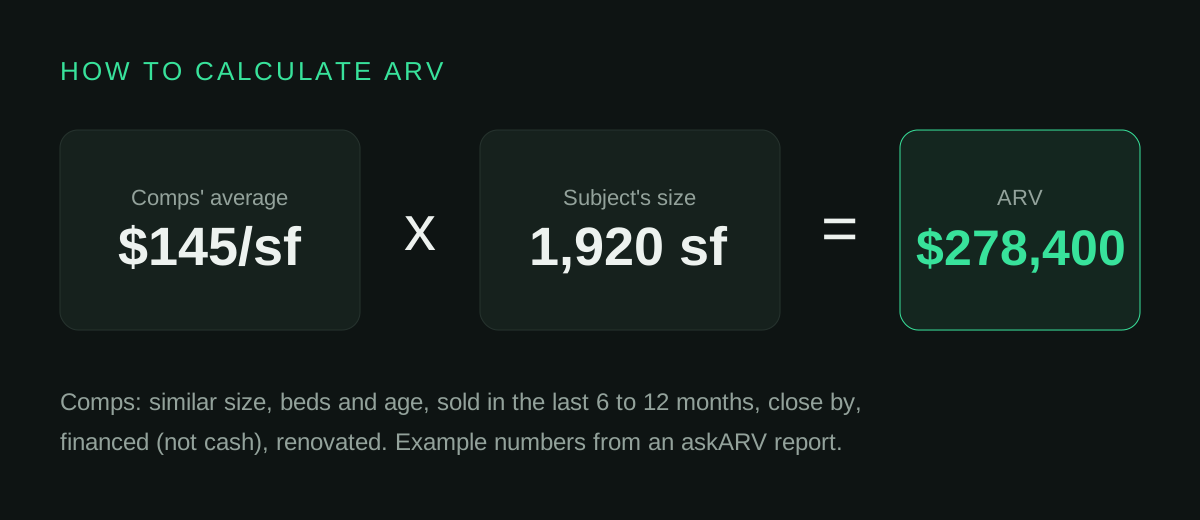
ARV is the average price per square foot of comparable renovated sales, multiplied by the subject property's square footage. If similar finished homes nearby sold for an average of $145 a square foot and the house you are looking at is 1,920 square feet, the ARV is about $278,400.
Step 1: get the real square footage
Everything is multiplied by size, so a wrong size gives a wrong ARV even when every comp is right. County records sometimes leave out a finished basement or list the wrong building entirely. Check the county number against the most recent listing, and count the basement the same way for the subject and for the comps.
Step 2: pull nearby sales in a size band
A tight, simple set of filters does most of the work:
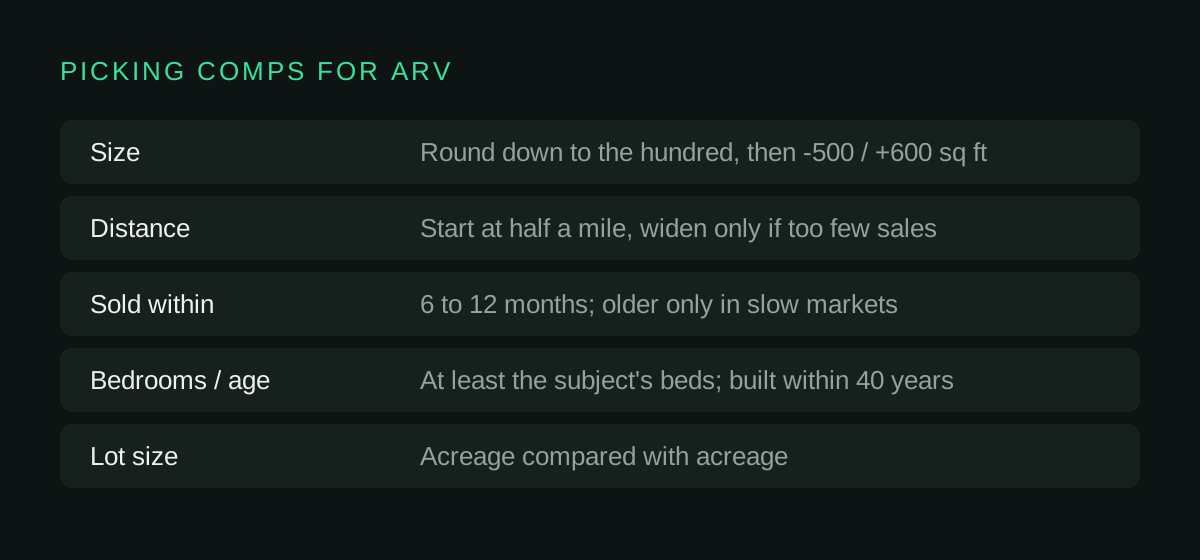
- Size: round the subject's square footage down to the hundred, then search from 500 below to 600 above. A 2,420 square foot house searches 1,900 to 3,000.
- Distance: start at half a mile. Widen only when too few sales come back; rural houses may need several miles.
- Sold within: 6 to 12 months. Go older only in slow markets.
- Bedrooms: at least as many as the subject.
- Year built: no more than about 40 years newer than the subject.
- Lot size: if the subject sits on acreage, compare it with acreage. Land carries value.
Step 3: keep the sales that reflect a finished house
Not every sale is evidence of an after repair value. Before averaging, take out the ones that are not:
- Cash purchases. A financed sale had an appraiser check the price; a cash sale is often an investor buying a fixer. They are useful for a wholesale price, not an ARV.
- Unrenovated houses. Look at the listing photos. Finished kitchens and baths are what you are pricing.
- Rentals and odd records. In some states a monthly rent can show up as a "sold" price. A $2,450 sale on a $400,000 house is a lease, not a comp.
- Bulk deeds. When one deed covers many units, each unit can show the combined price.
- Outliers. A waterfront or luxury sale far above the rest per square foot does not describe your house.
Step 4: average the price per square foot
Divide each remaining sale price by its square footage and take the average. Many experienced investors lean on the strongest few financed sales, since those are the finished houses. Then multiply by the subject's size from step 1. Write down the range from the lowest to the highest comp too; the spread tells you how much confidence the number deserves.
A worked example
| Comp | Sold | Sq ft | $ per sq ft |
|---|---|---|---|
| Comp A | $299,000 | 2,030 | $147 |
| Comp B | $269,900 | 1,762 | $153 |
| Comp C | $235,000 | 1,741 | $135 |
The average is about $145 a square foot. For a 1,920 square foot subject that is an ARV of about $278,400. With $23,320 of repairs, a $10,000 fee and the 70% rule, the maximum offer is about $161,560.
Common mistakes
- Using an online estimate as the ARV. Those value the house as it is today, not after repairs.
- Searching too wide too soon, which mixes in different neighborhoods.
- Counting a basement on the subject but not on the comps, or the other way round.
- Trusting one comp. Three to six is a sounder base.
Doing it in a minute instead of an hour
askARV runs these steps from an address: it finds the record, pulls the comps with these filters, sets cash sales aside, and gives the ARV, a max offer and a seller walk-down. Every comp is listed and can be unchecked, and every filter can be changed, so the final number is still your call.